Shine Pics/ Notebook/ Your wedding, your way
The Planning Notes · Issue 11
Your wedding, your way.
A letter on the traditions worth keeping, the ones worth dropping, and the small acts of rebellion that quietly make a day yours.
The best weddings I have ever photographed are not the ones that did everything by the book. They are the ones where the bride and groom looked at the long list of things you are supposed to do at a wedding, kept the ones that meant something to them, and quietly let the rest go.
This is the longer letter I always end up writing in my head after a particular kind of wedding. The kind where the couple did something small, on the day, that made the whole thing belong to them. A first dance to a song nobody recognised. No top table. A vegetarian menu because they're both vegetarian and they were tired of explaining it. A ceremony in a function room because neither of them go to church and pretending otherwise felt dishonest.
You are allowed to do this. I'm not sure anyone tells you clearly enough.
01The traditions are optional
Almost everything you imagine you have to do at a wedding is, in fact, optional. The white dress. The father-of-the-bride speech. The first dance. The bouquet toss. The garter. The cake-cutting photograph. The receiving line. The seating chart. None of these are required. Many of them are recent inventions. The white dress is from the 1840s. The bouquet toss is roughly from The Best Years of Our Lives in 1946. None of these are timeless.
You are not breaking a wedding by leaving any of them out. You are not even breaking your wedding. You are removing a piece that, if you didn't want it in the first place, was always going to feel slightly performative on the day.
"The best weddings I photograph are the ones where the couple kept what meant something and quietly let the rest go."Diana Nesbitt · Shine Pics
02The bouquet-toss problem
I'm going to pick on one specific tradition because it's the one I see go wrong most often. The bouquet toss. In theory, it is a charming little moment — the bride throws the flowers over her shoulder, the single women gather, somebody catches them, everyone laughs.
In practice, in 2026, it is genuinely uncomfortable for almost everyone involved. The single guests are corralled away from a perfectly good dinner conversation; the older ones don't want to be seen scrambling for flowers; the younger ones don't want to be visibly labelled "still single"; and the photographs of the moment, honestly, almost never make the album. I have shot perhaps a hundred bouquet tosses and used the photographs in fewer than ten.
This is not a campaign against the tradition. If it is meaningful to you, keep it. But it is one of the easiest things to quietly drop, and almost nobody at your wedding will notice it's missing. The bouquet itself can be pressed and kept; you don't have to throw it.
03What to keep
I am not, in this letter, arguing for a wedding stripped of every tradition. Some of them are meaningful precisely because they are old, and the meaning is in the doing. The exchange of rings. The vows themselves. The signing of the register. A walk down an aisle of some kind. The dance with one parent.
These tend to be the traditions where the meaning survives any setting. You can do them in a function room, in a forest, in a registry office. They aren't dependent on the venue or the dress. They are about the two of you, in a room with the people you love, agreeing to something out loud.
If you'd be relieved to skip it, you can skip it.
This is the test I'd offer any couple in planning. Go down the list of "things you're supposed to do at a wedding". Beside each, write either yes or relief. The yess stay. The reliefs go. You will be astonished how many of them are reliefs.
04What I see when couples make it their own
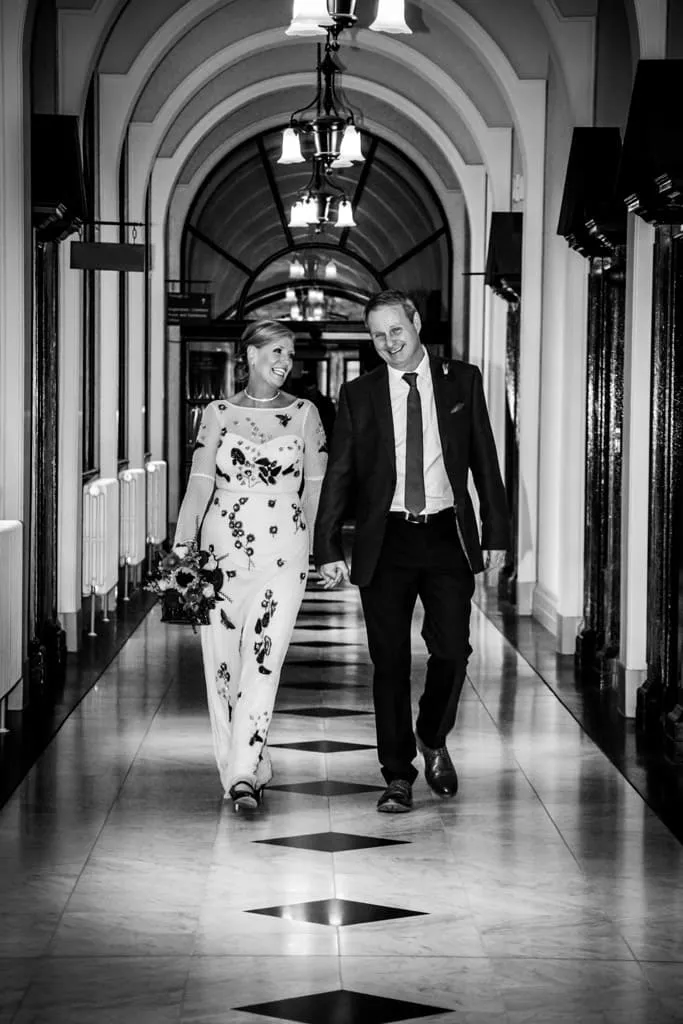
Couples who have done this exercise look different on their wedding day. Visibly. They are not performing. They are not anxiously checking whether the bouquet toss is starting yet. They are at their own wedding, doing the parts they wanted to do, in the order that made sense to them, surrounded by people who came because they wanted to be there.
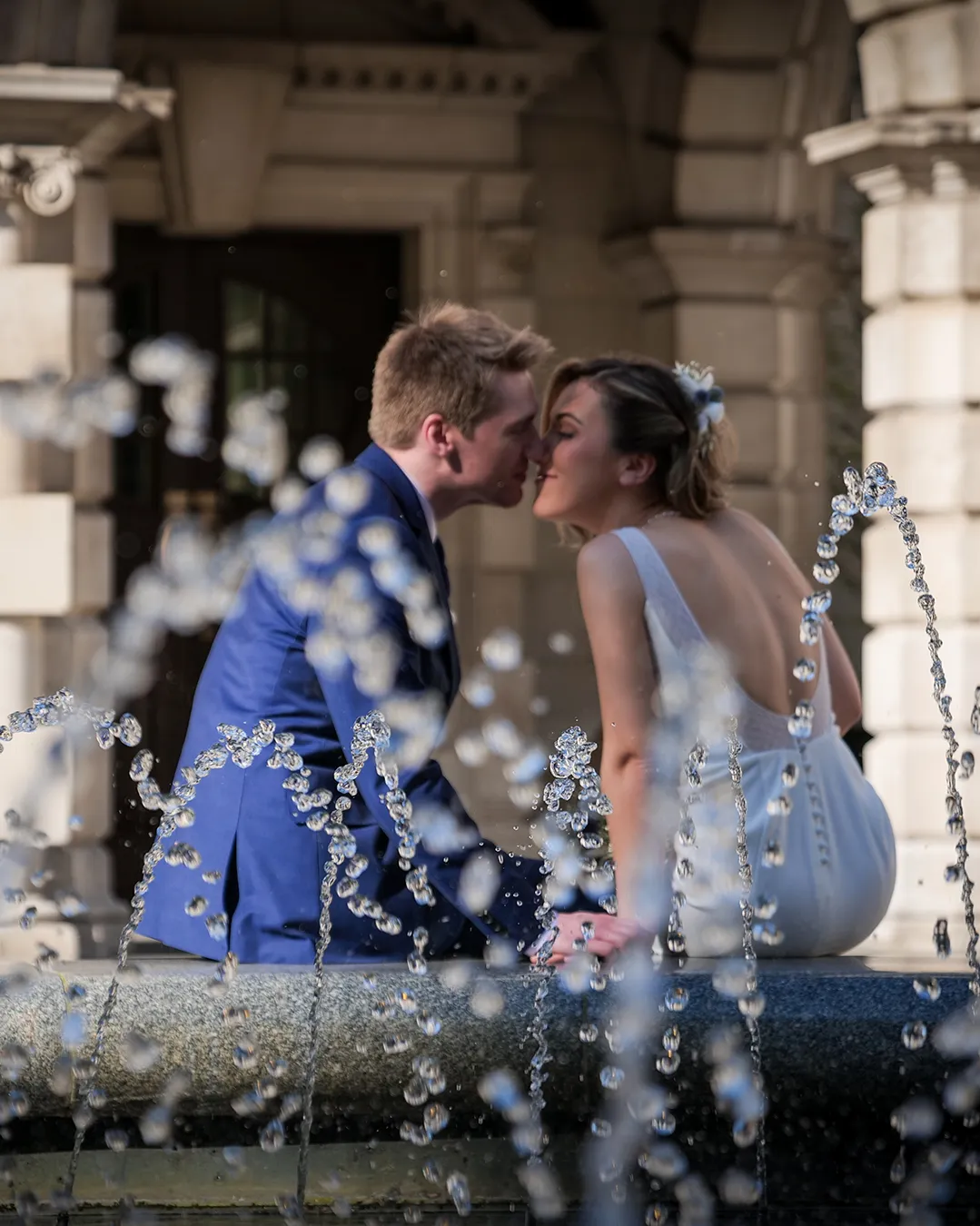
The photographs from those weddings are different too. There is more eye contact. Fewer of the staged "now-pose-for-the-cake-cut" frames; more of the genuine ones. The bride looks calmer. So does the groom. I notice this in maybe one wedding in three, and it is always the wedding that made up its own rules.
…the permission you don't need
Here is the only thing I really wanted to say in this letter. You don't need permission — not from your parents, not from the venue, not from the tradition, not from a magazine round-up, and certainly not from me. The two of you signing the register is the whole legal thing. Everything else is decoration. You choose the decoration.
If a tradition is meaningful, keep it. If it isn't, you can leave it out, and almost nobody will notice. The ones who notice are the ones who would have been quietly grumbling about the catering anyway. They will recover.
If you'd like a second pair of eyes on your draft running order — what's worth keeping, what's worth dropping — the contact form is the simplest way to talk it through. Diana on themed weddings is the shorter version of the same argument.